AC Leak Water Damage in Sunset Lake: Condensate Line Repair
An air conditioner is supposed to make your Sunset Lake home more comfortable, not soak the ceiling below it. When a condensate line clogs, cracks, or backs up, the water has to go somewhere, and that somewhere is usually drywall, insulation, subfloor, or a finished basement ceiling. By the time most homeowners notice a brown ring or a sagging tile, the leak has been running for days or weeks. That slow drip is what makes AC water damage so deceptive. It rarely floods a room in one night. It quietly saturates building materials, feeds mold colonies, and corrodes the air handler stand until a repair turns into a restoration project.
At Sunset Lake Water Restoration we get these calls all summer across central Indiana, usually in July and August when units run nearly nonstop. Some homeowners need a plumber or HVAC tech first. Others have already passed the point where drying alone will fix it. The honest answer depends on how long the line has been leaking, what category of water you are dealing with, and what materials got wet. If we cannot help, we will tell you directly. This guide is built around one detailed comparison table so you can match your situation to the right response, the right cost range, and the right professional, before the damage compounds.
Quick Answer: What to Do Right Now
Shut off the AC at the thermostat and the breaker. Place a bucket or towels under the drip. Photograph everything for your insurance file. If water has touched drywall, flooring, or insulation for more than 24 hours, call a water damage restoration company before mold begins to colonize (typically 48 to 72 hours after exposure).
Immediate Steps in Order
- Turn off the AC system at the thermostat and the breaker panel.
- Locate the indoor air handler and condensate drain pan.
- Place towels, buckets, or a wet/dry vac under the active leak.
- Move furniture, electronics, and rugs out of the wet zone.
- Take time stamped photos of every wet surface and stain.
- Call your HVAC tech for the line, and a restoration company for the damage.
Get the Leak Stopped and the Damage Dried Today
An AC condensate leak in Sunset Lake rarely fixes itself, and waiting a weekend turns a $1,500 dry out into a $9,000 rebuild with mold. Sunset Lake Water Restoration answers the phone 24 7, arrives with meters and equipment ready, and gives you a straight assessment before any work begins. If the damage is minor and you can handle it yourself, we will say so. If it needs a full mitigation, you will see the plan, the price, and the timeline up front.
What the Water Actually Damages
Condensate water starts clean (IICRC Category 1), but it degrades fast once it sits in building materials. After 48 hours, most AC leaks reclassify as Category 2 grey water. Our crews document the category on every job because it drives the scope of work and the insurance conversation. For a deeper breakdown, see our guide to Category 2 grey water cleanup.
| Affected Area | Typical Damage | Restoration Action |
|---|---|---|
| Ceiling drywall | Staining, sagging, paint bubbling | Cut out, dry cavity, replace |
| Attic insulation | Compressed, soaked, R-value lost | Remove and replace affected sections |
| Subfloor | Swelling, delamination | Dry in place or partial replace |
| Wall cavity | Hidden moisture, mold risk | Thermal imaging, controlled drying |
| Flooring | Warping, cupping, lifting | Mat drying or replacement |
| Light fixtures | Shorted wiring, corroded sockets | Electrical inspection, replace |
Preventing the Next Leak
Once the ceiling is dry and the patch is painted, a few habits keep the line clear for the long haul. Annual HVAC service should always include a condensate flush. Between visits, you can take simple steps yourself.
- Pour one cup of distilled white vinegar into the access tee every 60 to 90 days during cooling season.
- Check the secondary drain pan twice a year for rust or standing water.
- Confirm the float switch is installed and tested. If you do not see one, ask your HVAC tech to add it.
- Replace air filters on schedule. A clogged filter freezes coils, which is one of the top four failure modes.
- Have the line professionally vacuumed before each summer if your system is over 10 years old.
Cost Ranges in Sunset Lake
- Minor ceiling stain, no structural moisture: $400 to $900
- Drywall replacement plus drying: $1,200 to $2,800
- Attic insulation removal and drying: $1,500 to $3,500
- Multi room damage with flooring: $3,500 to $8,000+
- Mold remediation if delayed: Add $1,500 to $6,000
Most homeowner policies cover sudden and accidental AC leaks. Long term seepage is usually excluded, which is why documentation on day one matters. Our full water damage cost breakdown shows how insurance scopes line up with restoration invoices.
When to Call Immediately
- Water is actively dripping through a ceiling fixture or light.
- Drywall is sagging, bowing, or showing a brown ring.
- You smell musty odors near the air handler or in closets below it.
- The leak has been active for more than 24 hours.
- Anyone in the home has respiratory sensitivities or asthma.
- You see visible mold growth on the ceiling, walls, or insulation.
Why AC Condensate Lines Fail
Your air handler removes humidity from indoor air. That moisture collects in a drain pan and exits through a 3/4 inch PVC condensate line. In Sunset Lake homes, four failure modes account for almost every call we run.
- Algae and biofilm clogs: Warm, dark, moist PVC is the perfect algae habitat. A clog backs water into the pan and over the edge.
- Disconnected fittings: Glue joints fail over time, especially in attic installs that swing 40 degrees between seasons.
- Rusted or cracked drain pans: Common on systems older than 12 years.
- Frozen evaporator coils: A frozen coil thaws into a flood that overwhelms the pan capacity.
- Failed float switch or safety pan: Secondary safeties exist for a reason. When they corrode or get bypassed during a service call, nothing stops the overflow.
Seasonal Patterns We See in Sunset Lake
The first heavy run week of summer triggers a wave of calls. Systems that sat idle through spring start pulling 10 to 20 gallons of condensate per day, and any weakness in the line shows up fast. A second spike hits in late summer when algae growth peaks. If your system has not been serviced in over a year, the odds of a clog climb sharply.
The Sunset Lake Water Restoration Repair and Restoration Process
Step 1: Inspection and Moisture Mapping
We arrive within a few hours in most Sunset Lake ZIP codes. Every wet surface gets logged with a moisture meter reading and thermal imaging. We mark the dry standard for your specific materials so you know when drying is actually complete. Readings get uploaded to your job file daily, which gives your adjuster a clear paper trail.
Step 2: Water Extraction and Containment
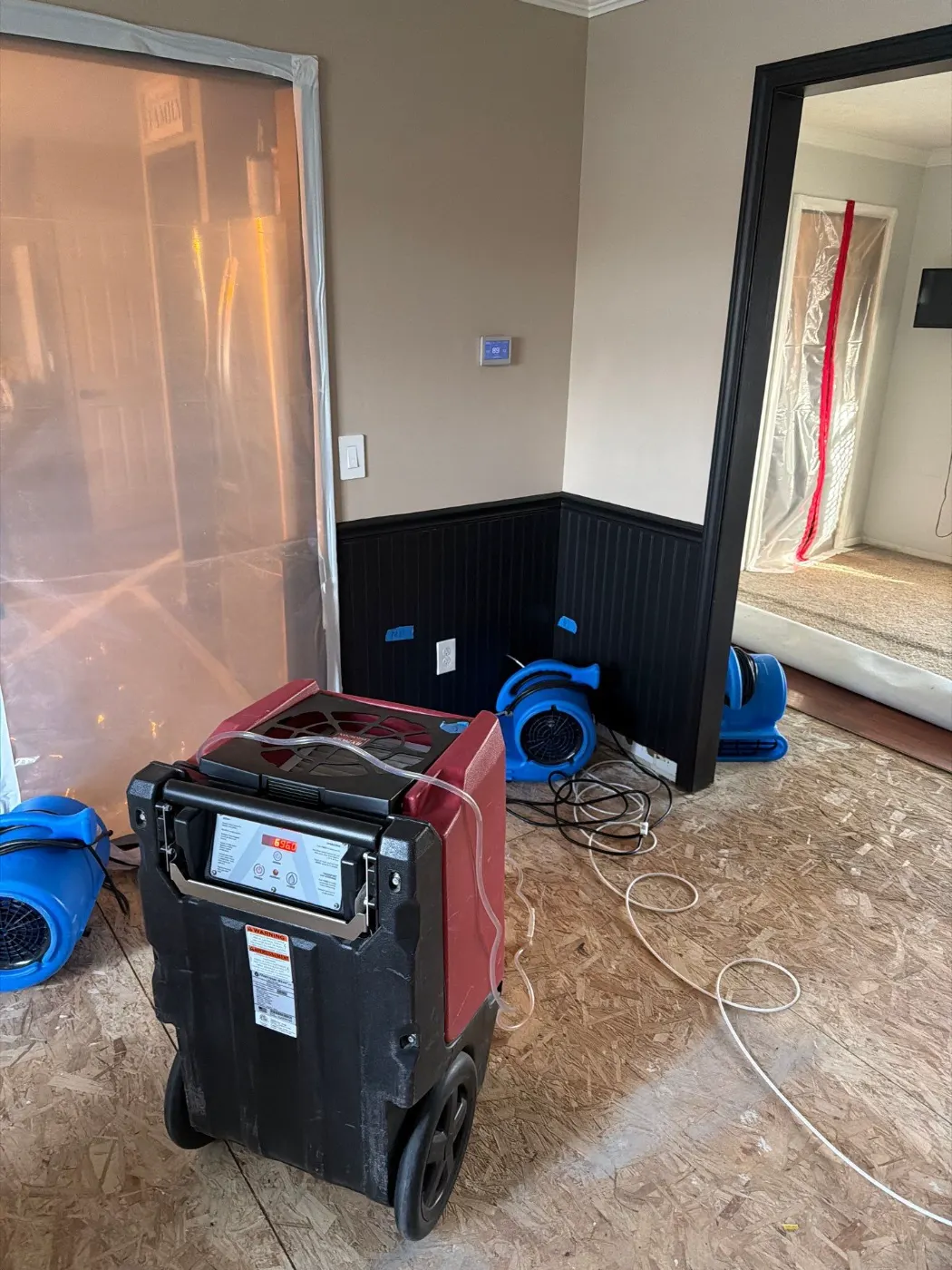
Standing water gets vacuumed. Affected zones get sealed in plastic containment with negative air pressure so spores and debris do not migrate to clean rooms. HEPA air scrubbers run alongside the dehumidifiers to capture any particulate that gets dislodged during drying.
Step 3: Structural Drying
Air movers and commercial dehumidifiers run 3 to 5 days on average. We monitor daily and adjust placement. If wall cavities are wet, we may drill small inspection holes behind baseboards to direct airflow. The same approach applies to hidden leaks behind walls.
Step 4: Repairs and Reconstruction
Drywall, paint, insulation, and flooring get restored to pre loss condition. We coordinate with your HVAC contractor so the condensate line is fixed before we close the ceiling. Skipping that handoff is the most common reason homeowners end up with a second claim six months later.
Frequently Asked Questions
How do I know if my AC condensate line is clogged?
Watch for water dripping from the secondary drain line on the exterior of your Sunset Lake home, standing water in the drain pan, or a tripped float switch shutting the system off. Musty odors near the air handler are also a strong indicator.
Can I clear the condensate line myself?
Yes, if there is no ceiling or wall damage yet. Use a wet/dry vacuum on the exterior drain termination for 2 to 3 minutes, then flush with vinegar. If water has reached drywall or flooring, call Sunset Lake Water Restoration for moisture testing before damage spreads.
Does homeowners insurance cover AC leak water damage in Sunset Lake?
Most policies cover sudden and accidental discharge from HVAC equipment, which includes a ruptured drain pan or split PVC fitting. Gradual leaks left unaddressed for weeks are typically excluded. Document the damage immediately and file within 14 days.
How long does it take to dry a ceiling after an AC leak?
With proper air movers and LGR dehumidifiers, a typical ceiling cavity dries in 3 to 5 days. Sunset Lake Water Restoration monitors moisture content daily and targets below 16 percent in wood framing before reconstruction begins.
What does AC leak restoration cost in Sunset Lake?
Minor ceiling repairs run $1,200 to $4,500. Jobs involving subfloor, hardwood, or multiple rooms range from $3,500 to $9,000. Sunset Lake Water Restoration provides written estimates before any work begins and bills directly to most insurance carriers.
Have a restoration question?
Our IICRC certified Sunset Lake crew is ready to help. Free assessments, estimate based on what we can sees, no pressure.